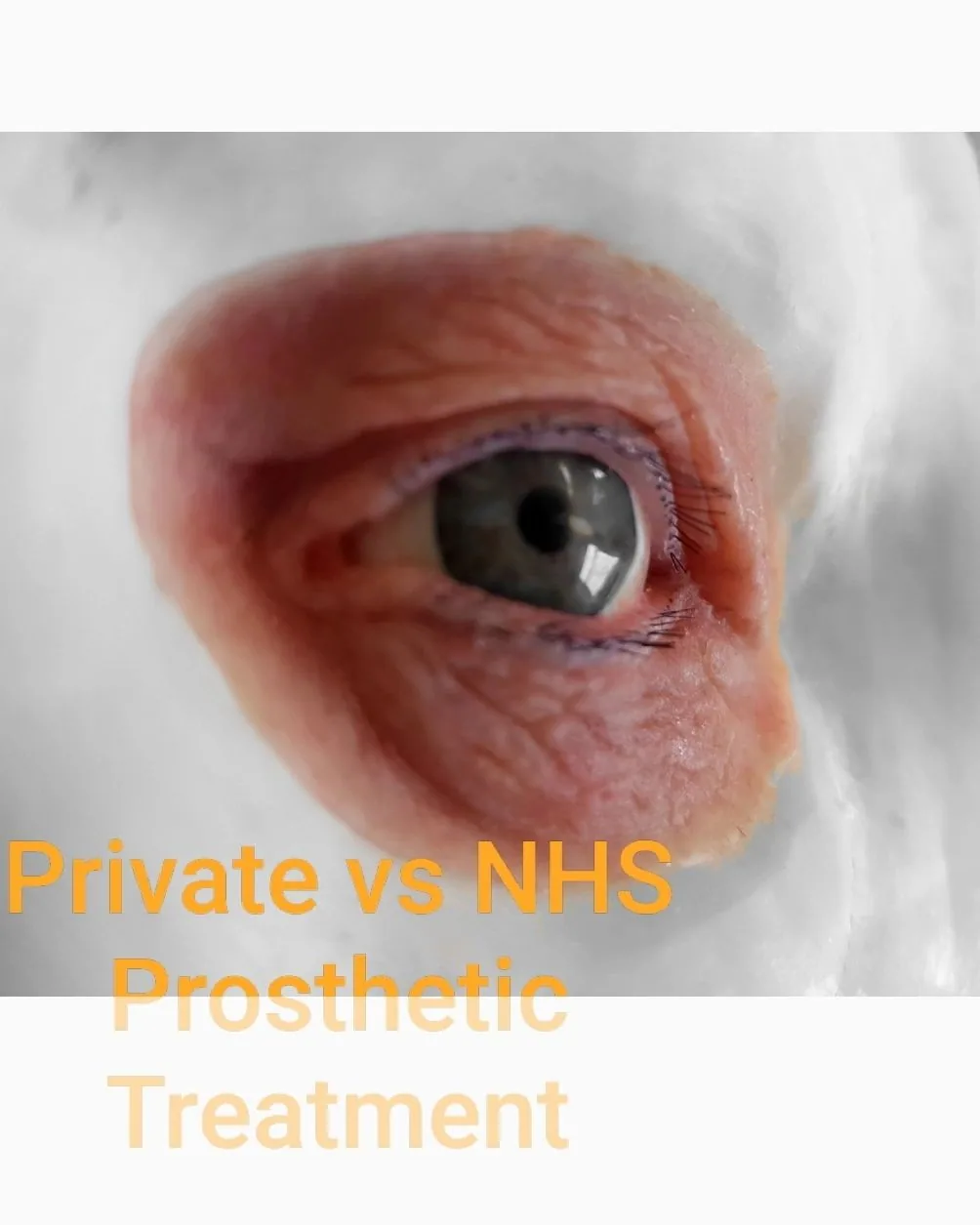
NHS and private prosthetic care offer different routes to specialist treatment. This guide compares access, consultation, treatment planning and costs, with questions to help you discuss the options relevant to your own circumstances.
Maxillofacial prosthetics, also known as facial and body prosthetics, is a highly specialised field of healthcare that restores appearance and, often, function for individuals who have lost part of their face or body due to cancer, trauma, or congenital conditions.
This can include custom-made artificial noses, ears, eyes, cheeks, nipples, and other prosthetic solutions that help people regain their identity and dignity.
In the UK, prosthetic treatment is available both through the NHS and via private clinics. But the experience, timeline, and end result can vary greatly depending on the provider and the pathway you choose.
A specialist service with limited access
While NHS maxillofacial and body prosthetics are fully funded, access is often limited due to:
- Fewer than 200 certified Maxillofacial Prosthetists practicing in the UK
- Not all NHS hospitals having prosthetics departments or in-house laboratories
- Long waiting lists and referrals to regional centres, often far from home
This means many patients must:
- Wait months or even years for assessment and treatment
- Accept limited prosthetic options based on local funding, not personal choice
- Navigate a fragmented and bureaucratic system with little emotional support.
Beyond survival: The psychological toll of facial and body difference
For many individuals, especially those recovering from life-saving cancer surgeries or traumatic injuries, physical healing is only one part of the story. The emotional impact of facial or body loss is deep, and often overlooked.
You may find yourself:
- Grateful to be alive, but struggling with a loss of identity
- Avoiding mirrors or photos, or no longer recognising your own reflection
- Feeling self-conscious in public, dreading eye contact or stares
- Withdrawing from daily activities or social events out of discomfort or fear.
These feelings are natural, but they are also treatable, with the right support and care.
Your Prosthesis - Your Choice
A prosthesis is more than a medical device, it’s a way to feel seen, expressed, and whole again. Some people want a realistic, discreet prosthesis that blends in seamlessly. Others want something bold and expressive that reflects their personality and story.
There’s no right or wrong. The key is choice.
That’s what private care offers:
- We listen to you
- We consider your emotional and psychological wellbeing
- We design your prosthesis around your goals, not what’s available on a funding list.
Choosing private care doesn’t mean turning your back on the NHS. It means choosing a faster, more personalised route when timelines, quality of life, and emotional support matter most. And if NHS care is your best option, we’ll gladly guide and support you in that direction.
What to expect from private prosthetic care
At Engreco Healthcare, private patients receive care that is deeply personalised, collaborative, and focused on outcomes, both functional and emotional. Here’s what your private prosthetic journey typically looks like:
1. Warm, Relaxed Initial Consultation
Patients often visit with family or friends. Our visitors comment on the welcoming environment, easy parking, and beautiful countryside setting. The clinic is conveniently located near Luton Airport and only 1 hour from central London.
Patients travel from all over the UK and as far as Europe and Asia to access high-quality private prosthetic care.
During your consultation:
- We explore your goals, lifestyle, and expectations
- Assess your residual limb or facial structure
- Discuss design preferences, cosmetic goals, and prosthetic types
- Provide a clear estimate of cost and timeline.
You’ll never be rushed. And if you have questions or concerns before your appointment, you can speak directly with a prosthetist or lead clinician.
2. Design and Fabrication
Unlike NHS care, where your design input may be minimal, you’ll be actively involved in shaping the look and feel of your prosthesis. Whether you want natural realism or artistic expression, your vision matters.
At Engreco, fabrication typically takes 4–5 weeks after your initial cast or scan. You may need 3–4 fittings, spaced over several weeks. We also offer same-day services for selected artificial eyes, denture repairs, retainers and other dental appliances. Nipple prostheses are not a same-day service.
3. Follow-Up, Support, and Lifelong Care
You’re not just a patient, you become part of the clinic family.
- Patients return for follow-up fittings, adjustments, and check-ups
- Many stay in touch via email or video, especially if they live abroad
- You’ll always have access to friendly, informed advice as your needs evolve.
People often come to the clinic with a prosthesis that’s too heavy, uncomfortable, or doesn’t suit their lifestyle. Our goal is to replace it with something that fits, physically, emotionally, and personally.
Private vs. NHS Prosthetic Care: A side-by-side comparison
1. Cost
- NHS: Fully funded by the healthcare system.
- Private: Self-funded or covered by private health insurance, with transparent cost breakdowns provided after assessment.
2. Waiting Time
- NHS: Patients often wait several months to years for treatment.
- Private: Initial consultation typically within 1–2 weeks, with prosthesis delivery in around 4–5 weeks.
3. Personalisation
- NHS: Prosthetic options may be limited by local funding and available materials.
- Private: Prosthetics are fully bespoke, designed to suit individual needs, lifestyle, and aesthetic preferences.
4. Technology & Materials
- NHS: Often uses traditional methods and a restricted range of materials.
- Private: Clinics use advanced technology such as 3D scanning, digital design, and high-grade materials like silicone and carbon fibre.
5. Design Involvement
- NHS: Minimal patient input in prosthesis design.
- Private: Patients are actively involved throughout the design and fitting process.
6. Support Approach
- NHS: Focus is primarily on the medical and functional aspects.
- Private: Offers holistic, person-centred care that includes emotional and psychological support.
7. Clinic Environment
- NHS: Typically hospital-based, clinical, and busy.
- Private: Relaxed, welcoming, patient-focused settings with more time for each appointment.
8. Follow-Up & Communication
- NHS: Limited follow-up options; communication can be formal and infrequent.
- Private: Lifelong support is often offered, with ongoing contact by phone, email, or video for adjustments and well-being.
9. Prosthesis Quality
- NHS: Standardised prostheses may not suit all cosmetic or functional needs.
- Private: High-quality, custom-fit prostheses that are often lighter, more comfortable, and visually precise.
10. Accessibility
- NHS: Services may require travel to regional centres and long waits for appointments.
- Private: Easier to access; some clinics welcome international patients and offer flexible scheduling.
FAQ: Everything you need to know about prosthetic treatment options UK
Q. Are facial and body prosthetics available on the NHS?
Yes, the NHS provides facial and body prosthetics for eligible patients. However, access may be subject to local NHS policies, and waiting times can vary depending on the region and demand.
Q. What are the advantages of choosing private prosthetic care?
Private care offers several benefits, including:
- Faster access to treatment with shorter waiting times.
- Bespoke, custom prostheses tailored to your specific needs.
- One-to-one guidance from experienced maxillofacial prosthetists.
- Ongoing support for adjustments and maintenance.
- Access to premium materials and advanced techniques.
Q. How much do private prosthetic treatments cost?
Costs can vary widely based on the complexity of the case, materials used, and whether it's your first prosthesis or a replacement. Private treatment costs typically range from a few hundred to several thousand pounds. It's advisable to consult with providers to get an accurate estimate.
Q. Can I combine NHS and private prosthetic treatments?
Yes, it is possible to have NHS and private prosthetic treatments, but there are considerations:
- Separate treatments: You cannot mix components from NHS and private prosthetics within the same device.
- Maintenance responsibilities: If you choose a private prosthesis, maintenance and repairs are typically your responsibility.
- Consultation: It's essential to discuss your options with your prosthetist to ensure compatibility and continuity of care.
Q. Is private prosthetic care covered by insurance?
Many private insurance providers cover prosthetic treatments, especially when they serve a health-related function. It's recommended to check with your insurer about coverage details and any necessary documentation.
Q. How do I choose between NHS and private prosthetic care?
Your choice depends on various factors:
- Waiting times: If you need a prosthetic urgently, private care may offer quicker access.
- Personal preferences: Consider the level of personalization and support you desire.
- Financial considerations: Assess your budget and insurance coverage.
- Medical needs: Discuss with your healthcare provider to determine the most suitable option for your condition.
You are still you
Whether your care is through the NHS or a private clinic, your identity, confidence, and dignity deserve to be honoured.
You're not just a patient. You're not just a survivor. You're a whole person with a story, a vision, and a right to feel seen.
At Engreco Healthcare, we offer holistic, person-centred prosthetic care that focuses not just on how your prosthesis looks or works, but how it makes you feel.
Free care is great. But care on your terms, that’s greater.
Take the First Step Towards Feeling Like Yourself Again
Let’s create something that reflects you, not just a medical necessity, but a part of your identity.
Written by:
Anna Veli - Consultant Maxillofacial Prosthetist (Engreco Healthcare)
(17 July 2025)