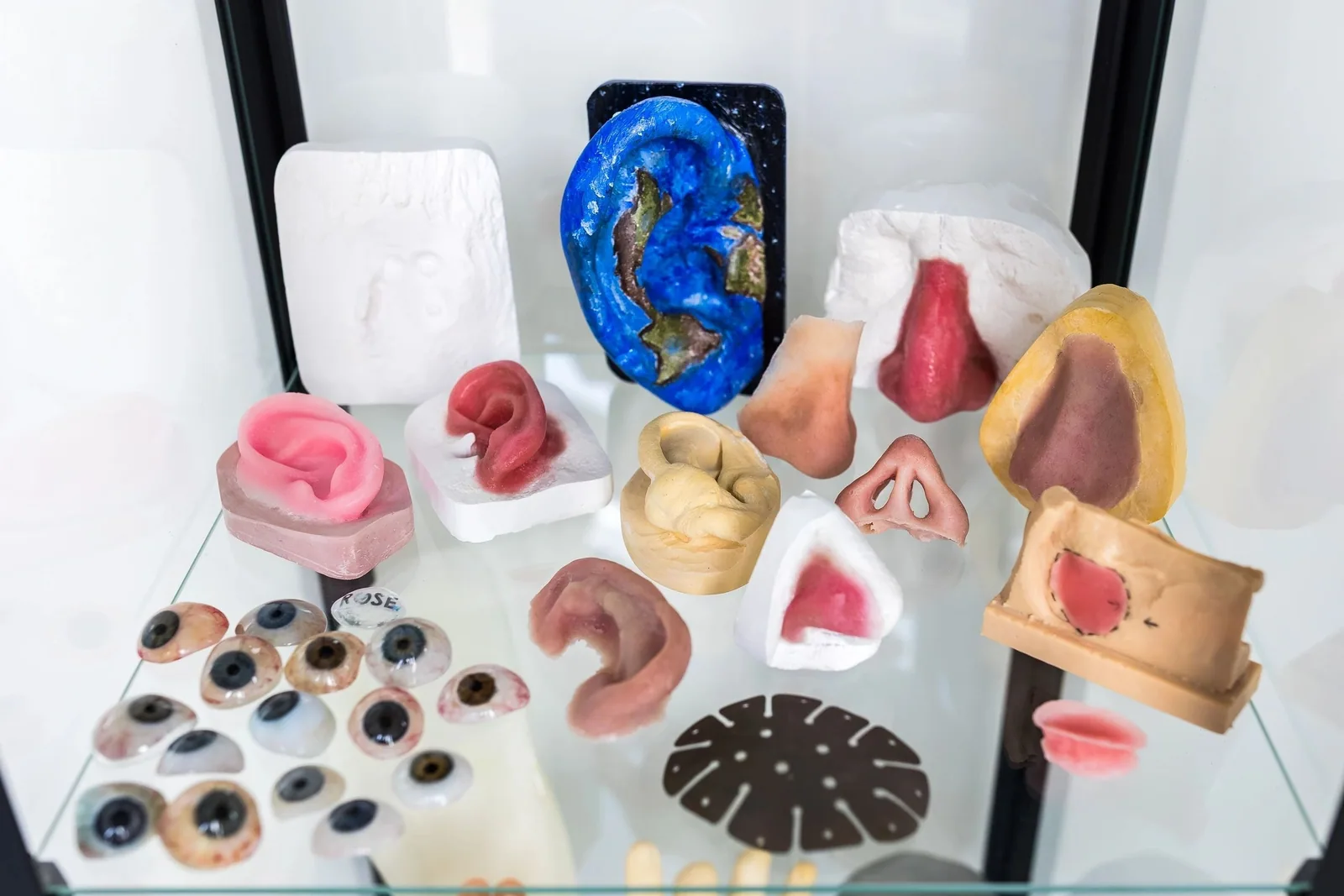
Facial and body prostheses are custom devices made to replace missing parts of the face or body. This guide introduces common types, how they are made, treatment choices, costs and everyday care.
Losing part of your face or body (to cancer, an accident, surgery, or a condition you were born with) changes more than your reflection. For many people, it changes how safe they feel walking into a room, how easily they make eye contact, how normal an ordinary day can feel again.
Facial and body prosthetics exist to help with exactly that. Not to erase what happened, but to give you back a sense of yourself: a face you recognise, a body that feels whole, the freedom to stop thinking about it and get on with your life.
What Are Facial and Body Prosthetics?
Prosthetics are custom-made devices that restore a missing or damaged part of the face or body, such as an eye, ear, nose, nipple, finger, or toe. Unlike surgery, they're non-invasive and removable, built from medical-grade silicone or acrylic to sit and move as naturally as possible against your own skin.
Reconstructive surgery is often the first option considered, and for good reason. It is the most permanent route to restoring anatomy. But surgery isn't always possible, isn't always advisable, or simply isn't what someone wants after everything else they've been through. Prosthetic rehabilitation offers a real, effective alternative: no operating table, no lengthy recovery, and a result that can be adjusted, refined, or remade as your needs change.
Every prosthesis is made specifically for the person wearing it. No two prostheses are ever the same, because no two faces, bodies, or stories are the same.
The people behind this work are specialists in a rare field: anaplastologists (American version), maxillofacial prosthetists (UK version), or epithetists (EU version) who focus on the face, body, and mouth and jaw. It's a discipline that sits somewhere between medicine, sculpture, and art. These specialists are trained clinicians who also happen to be skilled artists, because getting a prosthesis right means understanding anatomy, materials science, and the subtleties of human skin all at once.
Types of Facial and Body Prostheses
Ocular prosthesis (eye) - Often called a prosthetic eye or artificial eye, this type of prosthesis replaces a missing eyeball. It's custom-shaped to fit the patient's socket and hand-painted to match the remaining eye in colour and detail; though it doesn't restore vision. Artificial eyes are the longest-lasting prosthetics available and, with regular professional polishing, can look good for many years.
Nasal prosthesis (nose) - A removable device that restores the nose and surrounding skin and bone, often used after cancer surgery when reconstruction isn't the right option. Beyond appearance, this prosthetic protects delicate internal tissue and helps humidify the nasal cavity, doing some of the quiet, practical work a natural nose does.
Auricular prosthesis (ear) - This type of prosthesis restores part or all of a missing ear, usually held in place with medical-grade adhesive or a craniofacial implant. It won't restore hearing, but it can support glasses and give the side of your face its shape back.
Other facial prosthetics - Cheeks, chin, and lips can all be restored this way too, sometimes as a single combined prosthesis when more than one area is affected.
Body prosthetics - Prosthetic nipples, breasts, fingers, and toes are among the most common body prosthetics, helping restore symmetry and confidence after surgery, mastectomy, or injury. They tend to be smaller and more affordable than facial prosthetics, though they're rebuilt with the same care and attention to detail. This tend also to last the least, as are usually thinner and/or are subject to mor wear and tear, due to where they sit on the body.
How Are Silicone Prosthetics Made?
The process is slower and more considered than most people expect. It typically unfolds over several appointments:
- Consultation and assessment - Your prosthetist gets to know your condition, your goals, and what matters most to you (i.e. realism, comfort, durability, independence, etc.) and builds a plan around it, working alongside your wider medical team, where applicable. How a prosthesis stays on depends on you; medical-grade adhesive, natural anatomical fit, or an implant-retained system using titanium fixtures placed in the bone. Your prosthetist will talk through what suits your lifestyle and comfort.
- Impression or scan - A mould or 3D scan captures the exact shape and contours of the affected area and surrounding tissue, forming the foundation everything else is built on.
- Sculpting - A wax prototype is shaped to get the size, contour, and position right. Where available, photos from before surgery or an accident are used as a reference point for accuracy.
- Colour matching - Your skin tone is matched carefully, in layers, to recreate natural variation, translucency, and even subtle detail like pores. this is what makes the difference between a prosthesis that looks ready made and one that looks like skin.
- Fabrication - The prosthesis is manufactured in medical-grade silicone or acrylic, and hand-painted by the prosthetist.
- Final fitting - You'll leave with a prosthesis fitted and adjusted to you, plus clear guidance on wearing, removing, and caring for it. Most people have a follow-up visit or two, to fine-tune the fit as you settle in.
How many appointments this takes depends on what's being restored and how complex the case is. Your prosthetist will walk you through a realistic timeline at your first consultation.
How Realistic Do Custom-Made Prosthetics Look?
This is usually the first question people ask, and it's a fair one.
At conversational distance, a well-made prosthesis is rarely noticeable. The realism comes down to three things: the skill of the prosthetist, the quality of the materials, and how consistently the prosthesis is cared for afterwards.
It's worth being honest, too. A prosthesis will never be biologically identical to living tissue, and wear over time can affect its appearance. But for the vast majority of patients, the difference it makes to confidence and everyday social comfort is significant.
How Much Do Body and Facial Prosthetics Cost in the UK?
Cost depends on the type of prosthesis and the complexity of the case. Smaller body prosthetics, such as prosthetic nipples and fingers, tend to sit at the more affordable end. Facial prosthetics like eyes, ears, and noses involve more time, material, and craftsmanship, so they cost more, particularly if several stages or a remake are needed. Private treatment can range from a few hundred pounds to several thousand, depending on the work involved.
NHS provision does exist and is free at the point of care for eligible patients, but availability varies by region, commissioning arrangements, and clinical pathway, and waiting times can be long.
Private maxillofacial prosthetic clinics offer an alternative or complementary route, often with more flexibility around assessment time, materials, and scheduling. Your GP or a specialist prosthetist is the best starting point for understanding what's realistically available to you.
How Long Do Prosthetics Last?
On average, most silicone prosthetics last between 1-3 years, though some last considerably longer with good care. Artificial eyes are the exception; with regular polishing, they can perform well for many years (normally between 5-10 yeas, or even longer). Smaller body prosthetics, such as nipple prosthetics, may need replacing more often simply due to everyday wear and tear.
A few things shorten a prosthesis's lifespan faster than others:
- Sunlight and UV exposure
- Body oils and sweat
- Pollution
- Heat, and harsh or alcohol-based cleaning products.
The very first prosthesis you're given after surgery may not last as long as later ones. The surrounding tissue and the affected site itself is often still healing and changing shape in that first year. Once things settle, replacements tend to fit better and last longer.
Caring for Your Prosthesis
A little daily care goes a long way toward keeping your prosthesis looking natural and your skin healthy underneath it.
- Clean your skin daily with water and a mild soap.
- Clean the prosthesis daily using water, mild soap, and sometimes a soft brush.
- Care for any implants by gently brushing around them to keep the surrounding skin healthy.
- Build cleaning into your evening routine. Bedtime is usually the easiest time to make it a habit.
- Remove the prosthesis at night so your skin can rest. some prosthetics such us nipple prosthesis and artificial eyes can stay on for longer.
- Check your skin regularly for redness, irritation, or any early signs of infection.
- Avoid harsh chemicals, alcohol-based products, and hot water, which can damage silicone over time.
- Store it away from heat and sunlight when it's not being worn.
- Keep up with your reviews with your prosthetist.
Artificial eyes need a bit of extra attention. Professional polishing every 6 -12 months keeps them looking their best.
Can You Wear a Prosthesis All Day?
Yes, most modern prosthetics are designed for full-day wear, through work, social occasions, and travel. Depending on the type of your prosthetics and how it's attached, some can even be worn overnight or during light exercise, and waterproof adhesives mean showering or swimming is possible for certain prosthetics too. Your prosthetist can advise on what's suitable for your specific device and lifestyle, and adjustments can always be made if comfort needs improving.
Prosthetics vs. Reconstructive Surgery
These are two genuinely different paths, not a hierarchy of "better" and "second best."
Surgery aims to permanently rebuild anatomy. Prosthetics offer a removable, non-invasive alternative that can be adjusted or replaced as your needs change. Body and facial prosthetics are often the preferred choice when surgery isn't suitable, or when someone wants more cosmetic control after already going through extensive surgical treatment. Some patients combine both approaches, when possible. There's no single right answer, only the right answer for your circumstances, which is exactly what a specialist consultation is for.
FAQ: Everything you need to know about facial and body prosthetics
Q. What is maxillofacial prosthetics?
A. Also known as anaplastology, it's the clinical discipline of designing, fitting, and maintaining prosthetic replacements (i.e. prosthetic ears, eyes, noses, nipples, and more) for people who've lost part of their face or body to cancer, trauma, congenital conditions, or other causes.
Q. What does a maxillofacial prosthetist do?
A. They rehabilitate patients affected by disease, trauma, or congenital conditions, creating prostheses that restore missing bone or tissue and support essential functions like chewing and speech, as well as appearance and emotional wellbeing.
Q. Are prosthetics available on the NHS?
A. Yes, though provision varies by region and eligibility. Private clinics offer an alternative or complementary route. Speak to your GP or a specialist prosthetist about what applies to you.
Q. How do I know which type of prosthesis is right for me?
A. This depends on your anatomy, surgical history, dexterity, lifestyle, and personal priorities (i.e. realism, comfort, durability, and independence) often pull in different directions. A consultation with a certified prosthetist is the only reliable way to work out the right balance for you.
Q. Can two people with the same injury need completely different prosthetics?
A. Yes. Identical anatomical circumstances can call for very different solutions depending on the person's dexterity, lifestyle, skin condition, and personal goals.
Q. Are facial prosthetics permanent?
A. No, they're removable by design, held in place with medical-grade adhesives or bone-anchored implants rather than fixed permanently. Therefore, they need replacement every now and then.
Q. Will my prosthesis look fake?
A. Modern prosthetics are built to be as realistic as possible and are genuinely difficult to notice in everyday situations, though, as with any medical device, they won't be identical to natural tissue, and appearance can change gradually with wear. Most patients find the improvement to their confidence and day-to-day comfort far outweighs this. However, realism and prosthetic outcome depends greatly on your prosthetist's skill, the quality of the materials used, and how consistently the prosthesis is cared for afterwards.
Final thoughts
Choosing prosthetic rehabilitation is rarely just a practical decision; it's about identity, confidence, and finding your way back to feeling like yourself. There's no single right path, and there doesn't need to be one right answer today. What matters is having an open conversation with a specialist maxillofacial prosthetist who takes the time to understand your situation and walks you through the available options honestly.
At Engreco Healthcare, we've spent two decades combining clinical precision with empathy for what our patients are going through. Our focus isn't the prosthesis itself, it's helping you get back to feeling like you again.
If you'd like to talk through your options, book a consultation with our team.
Written by:
Anna Veli - Consultant Maxillofacial Prosthetist (Engreco Healthcare)
(12 April 2026)