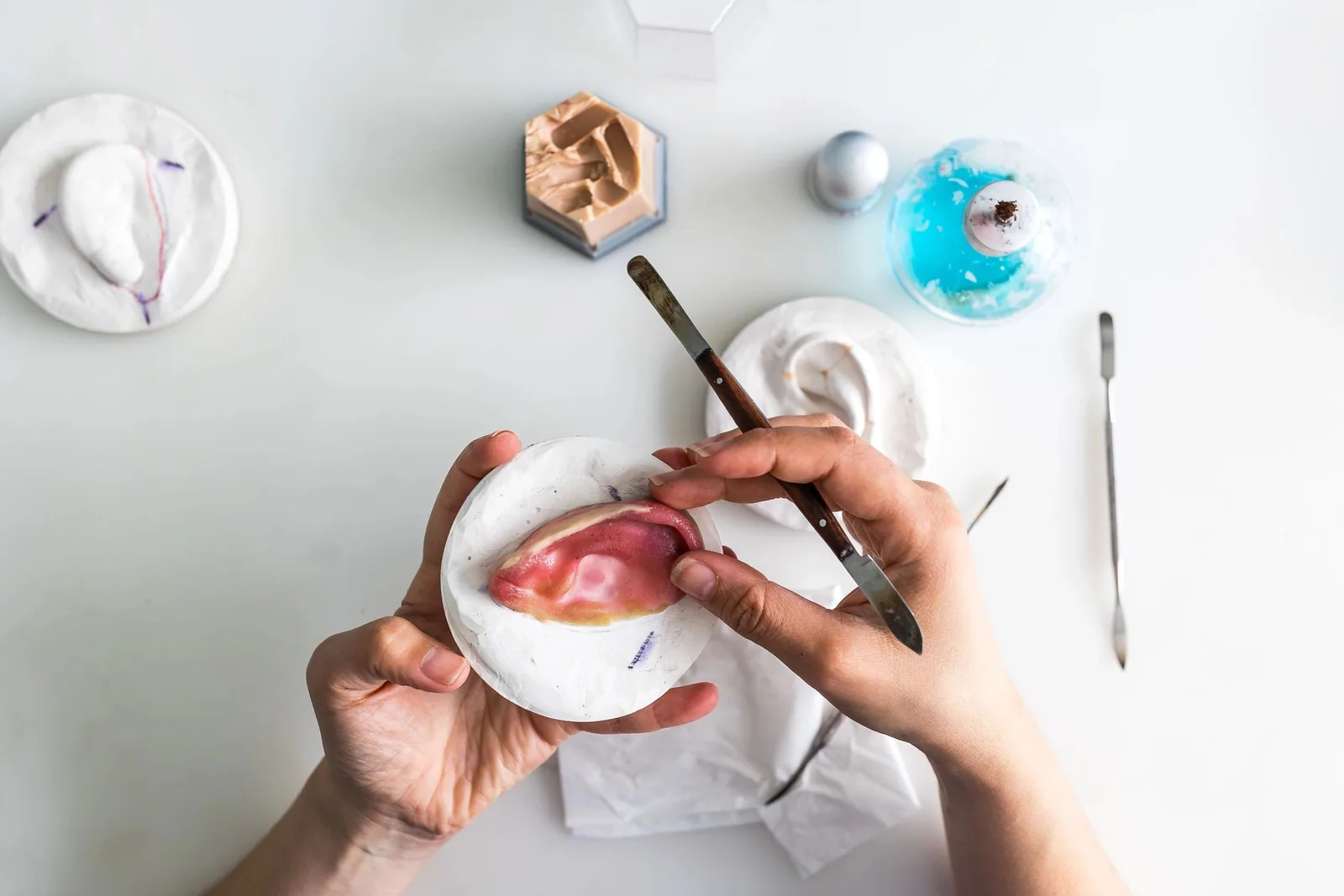
Getting a custom-made prosthesis begins with a consultation and a plan for your individual needs. This guide follows the process from your first enquiry through design, making, fitting and ongoing support.
There is a moment many of our patients describe: the first time they see themselves in the mirror after surgery, and don't quite recognise what looks back. It's a moment of grief, but it doesn't have to be the end of the story.
A custom-made prosthesis isn't just a medical device. It's a way back to your reflection, to a normal conversation without a second glance, to feeling like yourself again in a room full of people.
If you're considering this journey, you don't need to have it all figured out. You just need to take the first step, and we'll walk the rest with you.
Here is what that journey actually looks like, from your first enquiry to years of ongoing support.
1. Making an Enquiry
The first step is simply reaching out, and we know that alone can feel like a big one.
You may have been referred by your surgeon or oncology team, or you may have found us while searching for answers late at night, unsure of what's even possible. Either way, you don't need the right words or a clear plan. You just need to tell us what's happened and how you're feeling about it. For many people beginning their private prosthetic journey in the UK, this first conversation is the hardest part, and the moment they realise they're not alone in it.
2. Your Initial Consultation
This is where we start listening, really listening, before we say very much at all.
Your specialist maxillofacial prosthetist will take the time to understand your situation, your medical history, your story, and what matters most to you. That might mean discussing your surgery, examining the affected area, or simply asking how you've been coping since. There's no pressure here, and no commitment. This appointment exists so you can be heard.
We'll also ask what you're hoping to get back, whether that's your confidence at work, comfort in social situations, or simply the ability to stop avoiding mirrors.
3. Discussing Your Options
Once we understand your needs, we can talk honestly about what's achievable.
A custom-made prosthesis is built around you; your anatomy, your skin, your life. Your specialist will explain what the process involves, how the prosthesis will be worn and cared for, and what results you can realistically expect.
This is your moment to ask any question you might have. Nothing is too small, and nothing should be left unclear before you decide whether to proceed.
4. Planning Your Bespoke Prosthetics
If you choose to move forward, we begin planning something made specifically for you.
Depending on your needs, this may involve photographs, measurements, scans, or impressions of the affected area. For facial prostheses, particular care is given to shape, contour, and the finer details that surrounding features depend on, because a prosthesis that looks "close enough" isn't good enough. It has to look like you.
5. Creating and Customising the Prosthesis
This is where our team's craft comes to life.
Every prosthesis passes through several stages of modelling, shaping, and colouring, with colour-matching given particular attention so it blends naturally with your own skin tone. Using digital scanning, 3D technologies, and advanced silicone materials, we're able to replicate texture and tone with real precision. No two patients are the same, so no two prostheses are made the same way. This one is made for you, and only you.
6. Fitting and Making Adjustments
When your prosthesis is ready, you'll come in for a fitting, and this is often when patients tell us they finally feel a shift.
Your specialist will assess how it sits, how it looks, and how comfortably it can be worn, making small adjustments as needed. If anything doesn't feel quite right, tell us. Your feedback isn't a formality here, it's how we get this right for you.
Friends and family are also welcome during this appointment, as they can offer another pair of eyes and ears and make sure you are happy with the outcome.
7. Learning How to Wear and Care for Your Prosthesis
Once fitted, we'll guide you through putting it on, removing it, cleaning it, and looking after it day to day.
It's completely normal to need time to feel confident with something new. Our team will make sure you leave not just with a prosthesis, but with the knowledge and reassurance to make it part of your everyday life.
8. Follow-Up and Ongoing Support
Our relationship with you doesn't end at fitting. It continues for as long as you need us, and sometimes that is a lifetime.
We'll check in, support any adjustments or maintenance over time, and remain a point of contact as your needs change. Many of our patients tell us this ongoing relationship, knowing someone is still there, matters just as much as the prosthesis itself.
How Long Does the Process Take?
Every patient's timeline is different, shaped by the type of prosthesis, the complexity of the work, and the number of appointments needed. Physical healing from surgery can take weeks to months on its own, and emotional adjustment often takes longer still. The prosthetic process runs alongside that, not ahead of it. Your maxillofacial prosthetic specialist will walk you through the likely stages and timeframe for your specific situation during your consultation.
What Should You Bring to Your Consultation?
You don't need to arrive with everything prepared. It helps to bring details of any previous treatment or referrals, and it's worth writing down your questions beforehand if that helps you feel ready.
Most of all, come ready for an honest conversation about what you want your life to look like on the other side of this.
Bringing a friend or a family member, it also helps not only as a support but also, as an extra pair of eyes and ears, as you might feel overwhelmed with all the new information.
Taking the First Step
Getting a custom-made facial or body prosthesis can feel like a daunting decision, especially if this is unfamiliar territory. But you don't need every answer before you reach out.
The initial consultation exists to give you clarity, understand your needs, and help you see what's possible, with no pressure to decide anything on the spot.
If you're ready to explore what a custom-made prosthesis could mean for you, get in touch for an initial consultation. Talk to our team, ask your questions, and find out what your next step could look like.
Frequently Asked Questions: Everything you need to know about body and facial prosthetics
Q. What is facial loss after cancer surgery?
A. Facial loss occurs when surgical treatment for head and neck cancers requires the removal of facial structures, such as the nose, eye, cheek, or lips. It can affect appearance, function (i.e. speaking, eating, breathing) and sense of identity. Facial loss may be partially addressed through reconstructive surgery, a custom-made prosthesis, or both together.
Q. What emotional challenges can occur after facial loss?
A. Many people experience anxiety, low mood, social withdrawal, and difficulty with body image. Facial loss can affect identity, confidence, and relationships. Access to counselling and peer support, alongside prosthetic rehabilitation, can make a real difference in coping and adjustment.
Q. How can a facial prosthesis help?
A. A facial prosthesis restores missing features, supports everyday function such as speech or wearing glasses, as well as it helps rebuild confidence and a sense of self. For many patients, it's the turning point that makes returning to normal life feel possible again.
Q. What is psychosocial prosthetic support?
A. This includes counselling, peer support, and education to help patients adjust emotionally, rebuild confidence, and navigate social situations while wearing or maintaining their prosthesis. At Engreco, this support sits alongside the clinical process, not apart from it.
Q. Who is involved in the care of someone with facial loss?
A. An interdisciplinary team typically includes oncologic and reconstructive surgeons, maxillofacial prosthetists, speech and language therapists, psychologists or counsellors, nurses, and more, all working together to support both physical and emotional recovery.
Q. Are there any new innovations in facial prosthetics?
A. Yes. Digital design, 3D printing, improved silicone materials, and refined colour-matching techniques are making prostheses more precise, comfortable, and realistic, often with shorter fabrication timelines than in the past.
Q. Where can I find support for facial loss recovery?
A. You don't have to navigate this alone. Support is available through multidisciplinary maxillofacial prosthetics clinics, counsellors experienced in visible difference, peer support groups for head and neck cancer survivors, and online communities focused on prosthetic rehabilitation.
Changing Faces offers support and information for anyone with a facial disfigurement, including a skin camouflage service that teaches people how to apply specialist cover creams. Saving Faces, the Facial Surgery Research Foundation, can put you in touch with other people who have had facial surgery, which many patients find is the closest thing to talking with someone who truly understands. Get Ahead is a national charity supporting people living with head and neck diseases and cancers, with a patient group willing to share their own experiences. For cancer-specific support, Macmillan Cancer Support provides information and support across all cancer types, while The Swallows offers 24/7 support to head and neck cancer patients, survivors, and carers, with regular meetings and social events that reach across the UK. For breast cancer, there are a plethora of dedicated support groups and online support across the UK for women considering, undergoing, or living with the results of breast reconstruction.
Your specialist or key worker can also point you towards local, region-specific groups. Many hospitals run their own monthly meet-ups for head and neck cancer patients.
Here to help!
At Engreco Healthcare, we combine two decades of clinical and technical expertise with a deep sense of empathy for every patient's journey. Our mission is simple: to restore normality and dignity after life-changing surgery through compassionate prosthetic care.
If you would like more information or would like to book a consultation, please visit us at www.engreco.co.uk.
Written by:
Anna Veli - Consultant Maxillofacial Prosthetist (Engreco Healthcare)
(17 August 2026)