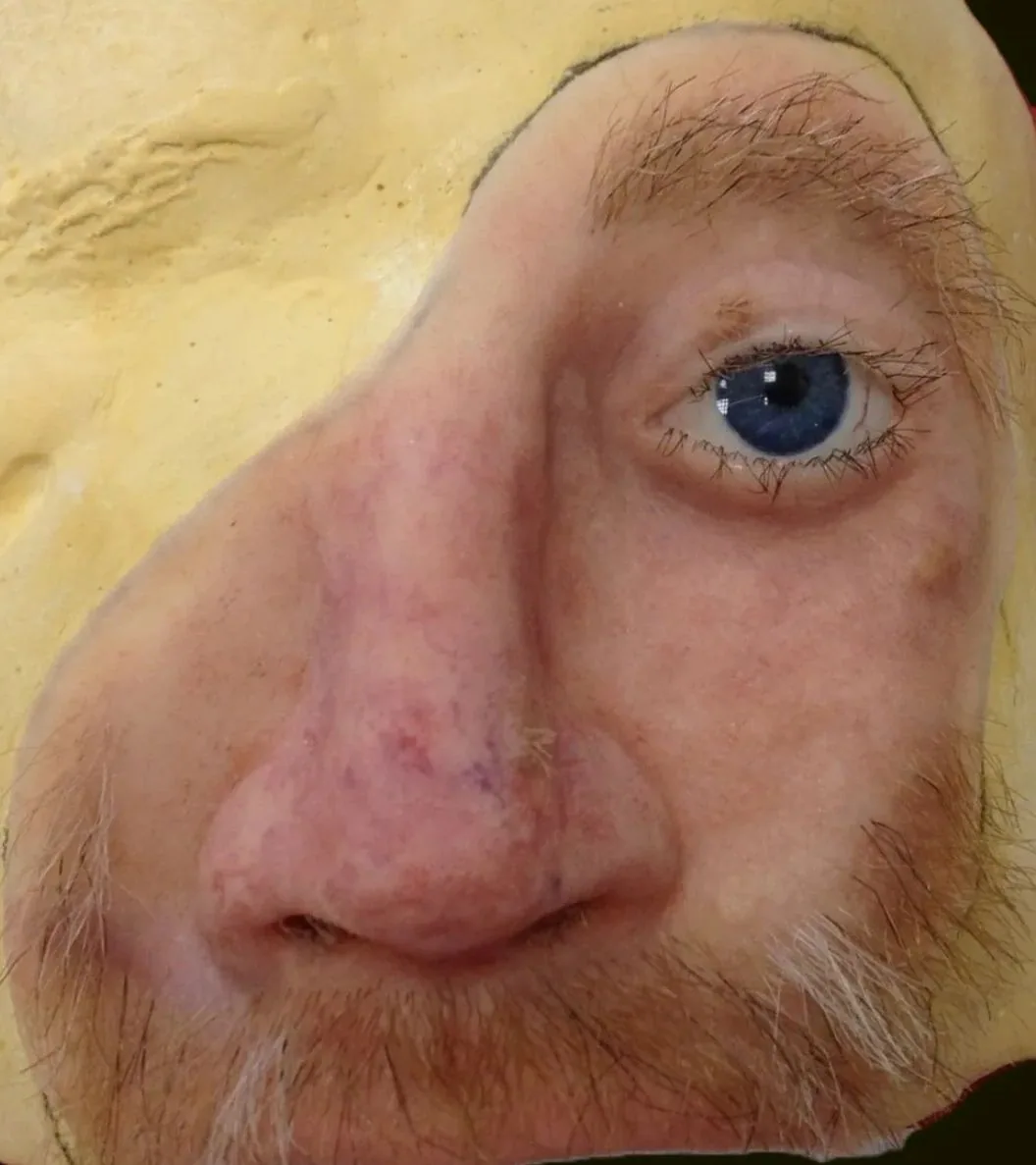
A facial prosthesis needs to suit the patient's anatomy, care needs and daily life. This guide for referring clinicians explores materials, retention, appearance, maintenance and the role of a specialist prosthetist.
A guide for surgeons and GPs when choosing to refer their patients
When a patient presents with a facial difference, whether due to cancer resection, trauma, congenital anomaly, or progressive disease, referring clinicians are often faced with a pivotal question: Where should I refer this patient for prosthetic rehabilitation?
As a surgeon or GP, understanding the hallmarks of a high-quality facial prosthesis can make all the difference in ensuring functional, aesthetic, and psychological outcomes that truly restore the patient’s quality of life. This guide outlines what to look for when selecting a maxillofacial prosthetist (either NHS or private practice) and how timely referral impacts patient outcomes.
Material Selection: Not all silicones are the same
The cornerstone of a facial prosthesis is the material it’s made from, most commonly medical-grade silicone. A high-quality silicone prosthesis offers:
- Biocompatibility - Safe for long-term skin contact, with minimal risk of irritation or allergic reaction.
- Pigment Stability - Colourfast pigments that mimic skin tones and resist UV degradation over time.
- Tactile Fidelity - Softness and texture resembling natural skin, especially important for facial prosthesis.
Poor-quality silicones may discolour, stiffen, or degrade prematurely, leading to patient dissatisfaction, skin breakdown, or the need for frequent remakes.
🔍 Clinical Tip: Ask your prosthetist what silicone system they use (i.e. platinum-cured vs tin-cured), and whether they employ intrinsic and extrinsic coloration techniques for a realistic finish, or if they relay only on extrinsic coloration, which tends to have a much shorter life span. Most importantly, is the silicone they are using medical-grade and tested for facial prosthetics?
Retention systems
Retention is critical to prosthesis stability. A high-quality prosthesis uses a bespoke retention system tailored to the patient’s anatomy, needs and lifestyle, and preferences. These may include:
- Medical adhesives - Hypoallergenic, daily-use prosthetic adhesives for straightforward application and removal.
- Anatomic undercuts - Passive retention using the natural contours of the defect.
- Magnets and bar & clip system - Custom-made magnetic or bar & clip systems integrated into implants. These are usually titanium fixtures placed in the zygomatic, temporal, or nasal bone, offering the most stable and discreet retention method.
- Mechanical retention - Hair bands or glasses are usually employed to provide retention on this system.
- A combination of 2 or more of the above.
An experienced prosthetist will assess the defect type, skin integrity, hygiene needs, and patient dexterity to recommend the optimal retention method, which is normally done before the surgery, but it can also be carried out after the healing has taken place.
🔍 Clinical Tip: For post-maxillectomy patients and complex cases with a combination of intraoral and extraoral needs, coordinate early with a prosthetist to ensure both the obturator/denture and the facial prosthesis treatment plans are compatible, particularly when implants are considered.
Aesthetics: The art behind the science
Functional fit is non-negotiable, but it’s the aesthetics aspect of a bespoke facial prosthesis that impact the patient’s self-esteem and social reintegration. therefore, a high-quality prosthesis is:
- Lifelike in colour and texture - including freckles, capillaries, pores, or scarring that blend with the surrounding skin.
- Individually designed and sculpted - using digital or analog techniques, based on the patient’s unique anatomy, mirroring the contralateral side, when necessary.
- Seamless in margin blending - ensuring minimal visual transition between the prosthesis and the skin.
🔍 Clinical Tip: Ask to see examples of the prosthetist’s work. Digital archives, patient case studies, or visual portfolios can demonstrate the level of artistry you can expect for your patients.
Longevity, maintenance, and patient support
A well-made facial prosthesis typically lasts 18–24 months with proper care (artificial eyes usually last up to 15-20 years, whereas a partial nose, ear or nasal button could last only a few months). Ongoing clinical support is essential, as this patients will need a replacement every so often to make sure optimum outcome is achieved at all times. This could include:
- Regular reviews - for skin health, adhesive tolerance, and prosthetic integrity.
- Replacement schedules - tailored to the rate of wear and patient-specific factors.
- Patient education - focusing on hygiene, storage, and troubleshooting.
🔍 Clinical Tip: Ensure you refer your patients to a maxillofacial prosthetist who offers long-term follow-up appointments as part of their treatment package, and has protocols in place for prosthesis review and replacement, not just fabrication.
When to refer
Early referral leads to better planning and better outcomes. Refer when:
- You’re planning a maxillectomy, mandibulectomy, or orbital exenteration. Your prosthetist could help with 3D planning, implant placement, if any, and interim prosthetic solutions, until your patient is done with their healing journey.
- The patient has sustained facial trauma with soft-tissue or bony loss.
- The patient is unsuitable for facial surgical reconstruction or declines it.
- There is a need for temporary prosthesis during oncology recovery or palliative care.
- The patient has craniofacial anomalies and other congenital conditions, needing staged intervention.
- Refer when in doubt of the available options, when facial rehabilitation is needed.
FAQ - Everything you need to know about facial prosthesis UK
Q. What are silicone facial prostheses made of?
Silicone facial prostheses are crafted from medical-grade silicone, a biocompatible material known for its durability, lifelike feel, and realistic colour matching. This material is commonly used for extra-oral prostheses, such as those replacing the ear, nose, or eye.
Q. How is a facial prosthesis made?
Creating a facial prosthesis involves several steps:
- Consultation and assessment
- Taking impressions or 3D scans of the affected area
- Sculpting and colour matching to achieve a natural appearance
- Fitting and adjustments to ensure comfort and function
The number of appointments depends on the complexity of the area being replaced.
Q. How are silicone facial prostheses attached?
Attachment methods vary based on individual needs and medical history. Common options include:
- Medical adhesives for easy daily use
- Bone-anchored implants for secure attachment
- Integration with glasses or hearing aids for non-invasive support
Your prosthetist will recommend the best method for your comfort and lifestyle.
Q. How long do silicone facial prostheses last?
Most silicone prostheses last 12–18 months, though factors like tissue changes, surgery, or wear can require more frequent replacement. Regular reviews help maintain fit, function, and appearance.
Q. How should I clean and care for my prosthesis?
Daily cleaning with warm water and a pH-neutral, scent-free soap is recommended. Use a soft cloth or gauze, avoid aggressive rubbing, rinse thoroughly, and pat dry. Store the prosthesis in a dry place, away from sunlight and heat. Follow your prosthetist’s instructions to prolong longevity.
Q. Will I have follow-up appointments after receiving my prosthesis?
Yes. Follow-ups are scheduled to check the fit, address concerns, and make adjustments. After the initial period, regular reviews, typically once a year, help ensure the prosthesis remains effective, comfortable, and realistic.
Final thoughts
Choosing the right maxillofacial prosthetist isn’t just about restoring appearance. It is about enabling dignity, function, and long-term quality of life. Surgeons and GPs are vital in this pathway by ensuring timely, informed referrals to professionals who specialise in facial prosthetic materials, retention systems, and aesthetic outcomes, offering a holistic treatment care.
If you're seeking a trusted provider offering bespoke silicone facial and body prosthesis, advanced retention systems, and patient-centred care in Bedfordshire and the surrounding counties, we're here to support you and your patients.
📩 Contact us today at www.engreco.co.uk to discuss your patient's case or arrange a multidisciplinary consultation.
Written by:
Anna Veli - Consultant Maxillofacial Prosthetist (Engreco Healthcare)
(24 July 2025)