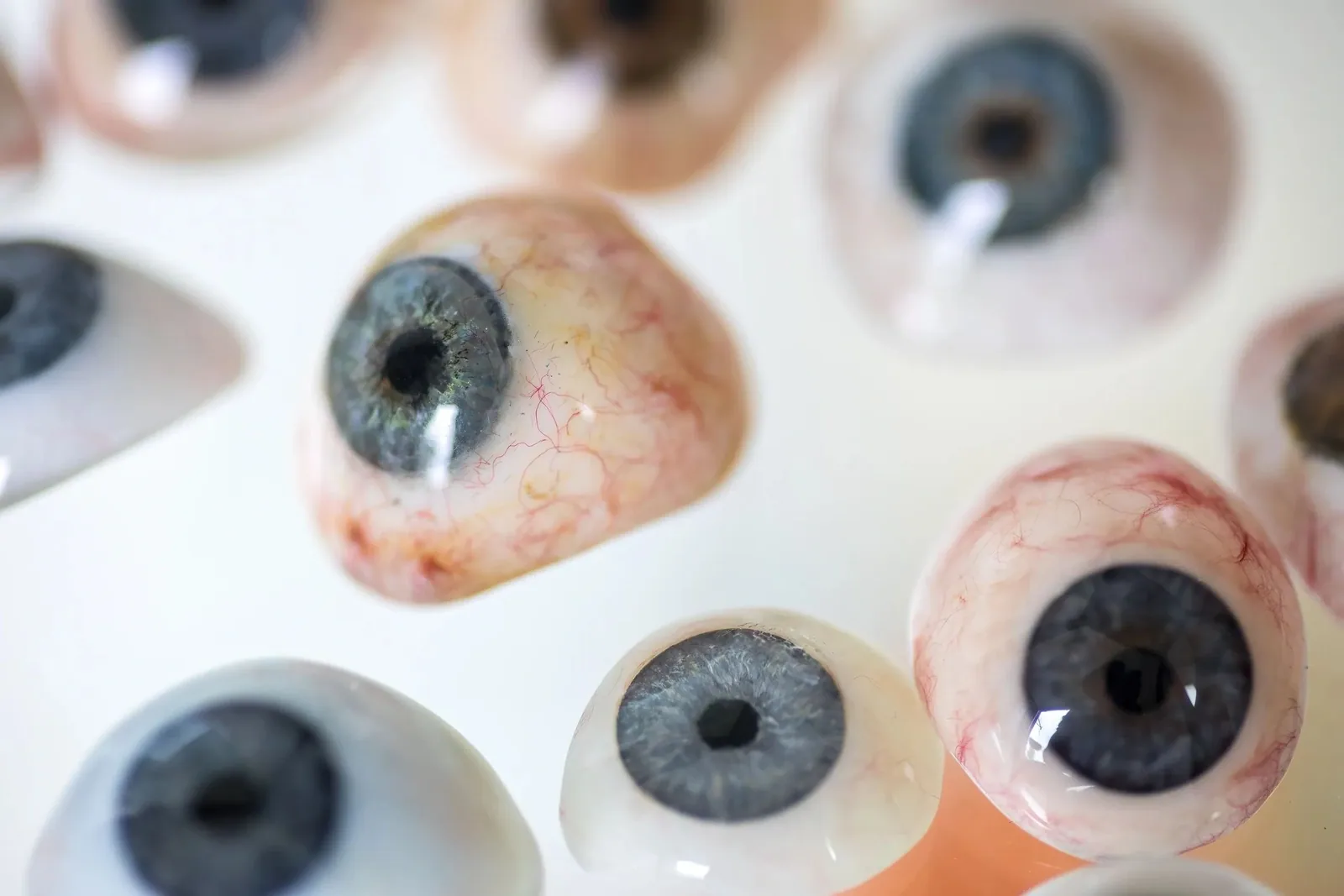
An artificial eye is a custom-made prosthesis shaped to fit the eye socket and match the other eye. It does not restore sight. This guide explains consultation, making, fitting and ongoing care in the UK.
Losing an eye through illness, injury, or a congenital condition can feel overwhelming. While sight cannot be restored, a prosthetic eye (also called an artificial eye or eye prosthesis) can provide a natural appearance, restore comfort, and support emotional recovery. If you are preparing for your first eye prosthesis UK, here is what you can expect from consultation to long-term care.
Understanding artificial eyes
An artificial eye is a custom-made ocular prosthesis designed to fit your eye socket and match your natural eye as closely as possible, although you can sometimes opt for a more expressive fun prosthetic eye. In the UK, these prostheses are hand-crafted by ocular and maxillofacial prosthetists using medical-grade acrylic, which is durable, safe, and more realistic than the traditional “glass eye.”
Common reasons for needing an eye prosthesis include:
- Surgical removal of an eye (enucleation or evisceration)
- Trauma or injury
- Eye cancer treatment
- Congenital conditions such as microphthalmia, anophthalmia, and more.
The process of getting a prosthetic eye in the UK
When you attend your appointment at an artificial eye clinic, here’s what usually happens:
- Consultation & Assessment – Review of your medical history, healing progress, and personal concerns.
- Impression Taking – A mould of your eye socket ensures a precise and comfortable fit.
- Trial Fitting – A wax or plastic pattern is refined to match your anatomy.
- Colour Matching & Detailing – The iris and sclera are hand-painted to match your natural eye, including blood vessels and subtle variations.
- Final Fitting – The prosthesis is polished, fitted, and checked for comfort and movement.
Most patients in the UK can expect the process to take several weeks or months if done via the NHS, while most private clinics, like Engreco Healthcare, offer faster turnaround options, including same day fit.
How an artificial eye looks and feels
- Appearance – A high-quality eye prosthesis is extremely lifelike and blends seamlessly with your natural eye.
- Movement – Depending on your surgery and implant, the artificial eye may move in coordination with your natural eye, minus a small loss of movement.
- Comfort – Once adjusted, most patients wear their prosthetic eye full-time without discomfort.
- Sensation – The eye itself has no feeling, but the surrounding tissue may be sensitive during healing, or if there is an infection. If all is good, you shouldn't feel any difference to your natural eye.
Caring for your prosthetic eye
To ensure your prosthetic eye remains comfortable and healthy:
- Hygiene – Wash your hands before handling the prosthesis.
- Professional Polishing – Every 6 - 12 months, your prosthesis should be polished by an ocularist to restore smoothness and shine. Polishing reduces protein build-up, keeps the prosthesis looking clear, and minimises irritation.
- Replacement – Most artificial eyes last 3 - 5 years for adults; children require more frequent replacements as they grow. If there are no changes to the tissue and no further surgeries are required, some patients could have the same eye prosthesis for 10 - 20 years without problems.
- Check-ups – Regular reviews are important to maintain socket health and comfort.
NHS vs Private artificial eye clinics in the UK
Patients in the UK can access an bespoke artificial eye services through:
- NHS Services – Free treatment but often with longer waiting times and fewer appointment options.
- Private Clinics – Faster access, flexible appointments, and highly personalised care. Some also offer specialist prostheses such as cosmetic or fun eyes.
Artificial eyes for children
In cases of congenital absence or underdevelopment of an eye, children are fitted with clear conformers to support socket growth. As they develop, customised prosthetic eyes are fitted and regularly replaced. Early intervention is essential to support healthy facial growth and development.
Acrylic vs glass artificial eyes
While many still use the term “glass eye,” modern prosthetic eye UK services are made from acrylic, as glass prostheses are no longer standard in UK practice. Acrylic offers:
- Better comfort and safety
- Precise customisation
- Easier colour matching
- Longer durability
Adjusting emotionally
Getting a prosthetic eye in the UK is a journey of healing, adaptation, and renewal. Adapting to an artificial eye takes time. Many patients worry about appearance or confidence in social settings. With modern techniques, artificial eyes look natural, feel comfortable, and allow you to live with confidence. Support from counselling, peer networks, or charities for people with facial differences can be valuable.
Whether you choose NHS care or a private clinic, regular aftercare and professional support ensure the best results. If you are considering an artificial eye UK, speak with an experienced ocular or maxillofacial prosthetist who can guide you through the process with expertise and compassion.
FAQ - Everything you need to know about artificial eyes UK
Q. Will my artificial eye look real / natural?
Modern custom prosthetic eyes are hand-painted to match the other eye in colour, iris pattern, and scleral details. Nearly all UK ocular prosthetics centres emphasise realistic appearance. Movement varies; some movement is possible if the implant allowed muscle attachment, but it will not fully match a natural eye.
Q. How should I care for / clean my prosthetic eye?
Remove your prosthesis as instructed by your ocularist. Clean it with mild soap and warm water (or a recommended cleaner), rinse well, and re-insert. Use lubricating drops if advised and attend annual check-ups/polishings. Proper hygiene prevents irritation, discharge, or infection.
Q. How long does a prosthetic eye last? How often will I need a replacement?
A prosthetic eye usually requires annual polishing/checks. Replacement is typically needed every 2–7 years (commonly ~5 years), depending on wear, socket changes, or patient comfort.
Q. When can I be fitted / how soon after surgery will I get an artificial eye?After eye removal surgery, the socket needs several weeks to heal. Many centres provide a temporary conformer/prosthesis initially. A bespoke prosthetic eye is usually made and fitted around 8–12 weeks post-surgery, though timing varies by healing and centre.
Q. Can an eye prosthesis restore vision?
No, an artificial eye is cosmetic and anatomical, designed to improve appearance and facial symmetry. It does not restore vision, but can greatly enhance confidence and facial balance.
Q. How much does an artificial eye cost in the UK? Is it covered by the NHS?
In the UK, most patients access prosthetic eyes through NHS centres (local or regional NAES services). NHS provision generally covers the cost. Private options exist, and prices vary depending on the provider and complexity of the prosthesis, ranging from £1,500 upwards. At Engreco Healthcare, the initial consultation is £79 and is credited against your prosthetic treatment if you proceed. Contact our team to discuss your options.
Written by:
Anna Veli - Consultant Maxillofacial Prosthetist (Engreco Healthcare)
(04 September 2025)