
Dental Technicians - The Hidden Heroes of Dentistry
Dental technicians make many of the crowns, dentures and appliances used in dental care. This article explains how their laboratory work connects with a dentist's clinical role and why patients should know who makes their devices.
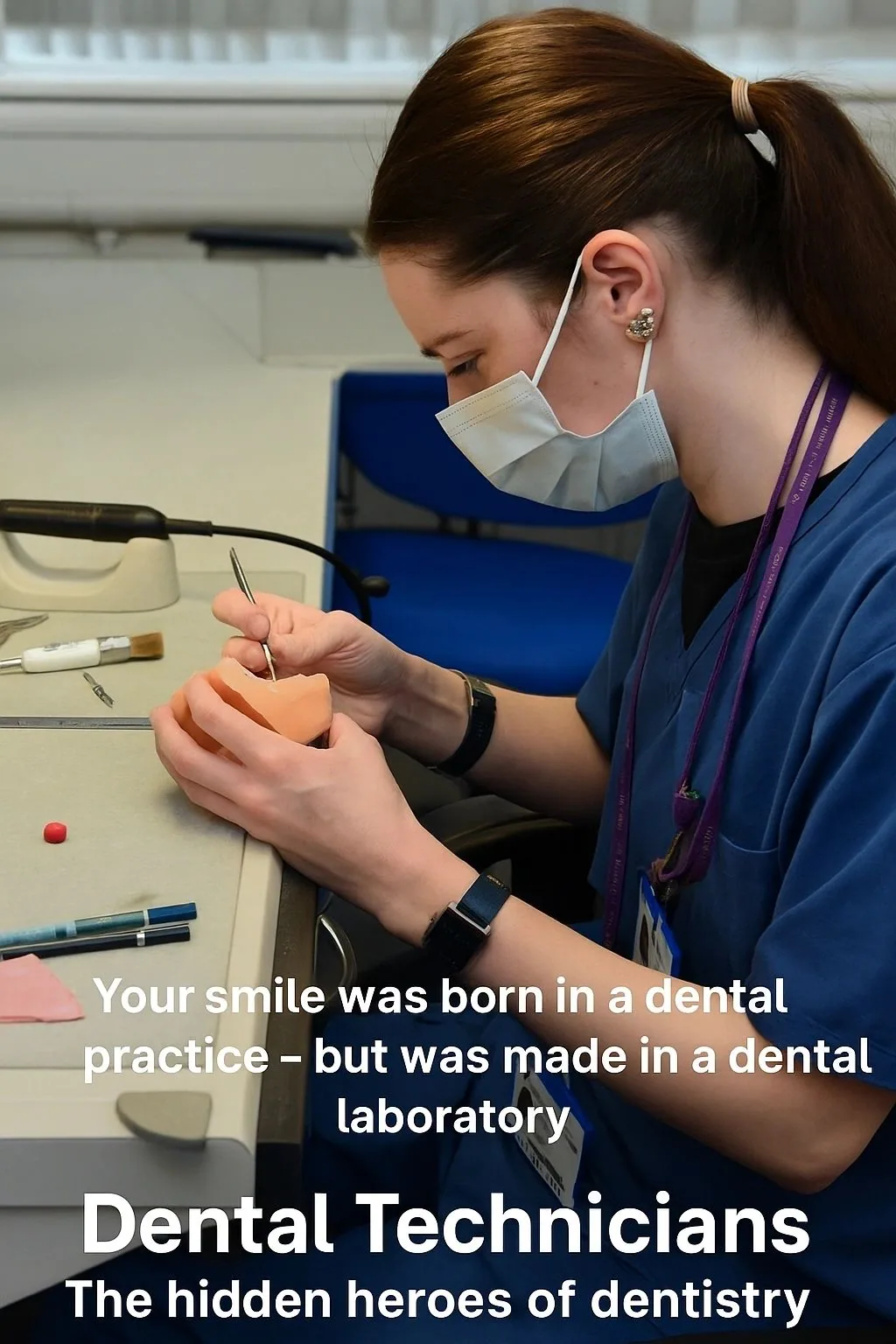
Behind every great dentist is a skilled dental technician
When you sit in the dental chair for a crown, denture, or orthodontic retainer, it’s easy to assume your dentist handles every part of the process. What many patients don’t realise is that, unless your appliance is made directly chairside, it is crafted by someone else: a highly skilled dental technician.
Dental technicians are the unsung heroes of dentistry. Working behind the scenes, they combine science, precision, and artistry to create custom-made restorations that restore your smile, confidence, and function.
Understanding the difference: Dentist vs. Dental Technician
Dentists are your clinicians. They examine, diagnose, design treatment plans, take impressions or digital scans, and prepare your teeth or place implants.
Dental technicians take this data and turn it into real-life solutions. Using advanced tools and techniques, they fabricate a wide range of custom-made dental devices, including:
- Crowns, bridges, and veneers
- Dentures and obturators, including repairs
- Orthodontic appliances
- Anti-snoring devices
- Maxillofacial prostheses
- And many more
This collaboration is critical; great dentistry is always a team effort.
Why patients should know
Dental technicians are rarely mentioned during consultations, yet they play a vital role in your treatment’s success. The quality of lab work can significantly impact the appearance, fit, and longevity of your dental appliance.
Ask your dentist:
- Who is making my dental work?
- Is it made by a GDC-registered dental technician?
- Is it made locally in the UK or outsourced abroad?
With the rise of 3D printing and unqualified individuals making appliances, ensuring your device is produced by a registered dental professional is more important than ever.
A GDC-registered dental technician ensures your appliance meets UK safety and regulatory standards, including material biocompatibility. Your safety, and your smile, depend on it.
The technician–dentist dynamic
A highly skilled dentist can only go so far without an equally skilled dental technician. A poor technician can undermine even the best clinical work, while a great technician can elevate a case through refined fit, margins, and aesthetics.
Technicians often hold undergraduate or advanced degrees, complete 4–5 years of formal training, and continue to upskill throughout their careers. Many specialise in complex areas such as:
- Full-mouth reconstructions
- Implant-supported prosthetics
- Maxillofacial rehabilitation
They bring precision, anatomical knowledge, and creativity to every case.
Time to celebrate the technicians
Across the UK, dental technicians are restoring lives — quietly, humbly, and with extraordinary skill. Their work demands:
- Micron-level precision
- Deep understanding of anatomy and function
- An artistic eye for natural aesthetics
- Creative problem-solving in complex cases
Yet recognition is rare. Many patients don’t know who makes their dental appliance, and some work is outsourced to non-qualified providers.
It’s time to change that.
Your smile was born in a dental practice, but it was made in a dental laboratory. Next time you visit your dentist, consider asking about the technician who made your appliance, and maybe even send a thank-you note — we’re smiling with you, behind the scenes.
FAQ – All you need to know about dental technicians UK
Q: What does a dental technician do? Designs and fabricates custom dental appliances — dentures, crowns, bridges, orthodontic devices — usually in a lab from a dentist’s prescription.
Q: Are dental technicians regulated? Yes. They are part of the dental care professional group regulated by the General Dental Council (GDC) and must meet recognised qualifications and standards.
Q: Can overseas labs affect quality? Yes. Labs outside the UK may not follow regulations, risking substandard materials, poor fit, or compromised safety.
Q: How long will my denture or crown last? With proper care, many last several years, but wear, changes in your mouth, or temporary appliances may require relining or replacement.
Q: Who fits my appliance? Your dentist (or a clinical dental technician) fits it. The lab technician makes the device from your dentist’s prescription.
Q: How do I ensure my appliance is safe and effective? Confirm it’s made by a GDC-registered technician in the UK, ask about materials, and request verification of lab origin.
Written by:
Anna Veli - Consultant Maxillofacial Prosthetist (Engreco Healthcare)
(29 June 2025)