Trismus means reduced mouth opening. This guide explains how it can affect daily life after head and neck cancer treatment, and describes jaw rehabilitation and devices discussed in specialist care.
Trismus, also known as restricted mouth opening, is a common and often frustrating side effect of treatment for head and neck cancer. It can develop after radiotherapy, surgery, or both, and can make everyday things such as eating, speaking, brushing your teeth and visiting the dentist much harder.
The good news is that trismus can often be improved. Jaw exercises and jaw-opening devices such as TheraBite and trismus screws play an important part in rehabilitation. Here we look at what trismus is, why it happens, and how these devices can help.
What is trismus?
Trismus is when you cannot open your mouth as wide as normal. Most adults can open their mouth around 40–50 mm. For people treated for head and neck cancer, an opening of 35 mm or less is usually classed as trismus. That said, the number is only part of the picture. What really matters is how the restriction affects you. Limited mouth opening can make it harder to:
- eat, chew and swallow
- speak clearly
- keep your mouth and teeth clean
- have dental check-ups, treatment or impressions taken
- allow your clinical team to examine the back of your mouth.
How cancer treatment affects the jaw
Radiotherapy to the head and neck can affect the chewing muscles and the tissues around the temporomandibular joint (TMJ). Over time, these tissues can become scarred and less flexible, a process called fibrosis. The risk is higher when radiotherapy is aimed close to the jaw joint and the deep chewing muscles. Trismus often appears in the months after treatment and can slowly get worse if nothing is done.
Surgery can also cause trismus. Scar tissue and changes to the muscles, soft tissues and shape of the mouth can all limit jaw movement. When surgery and radiotherapy are combined, several of these factors may work together.
The role of jaw rehabilitation
The aim of jaw rehabilitation is simple: to keep, or improve, how far your jaw can move through gentle, regular stretching. This can be done with exercises alone, or with the help of a jaw-opening device.
For people who already have trismus, the research is encouraging. A large review of 13 clinical trials found that jaw exercises using a device improved mouth opening. In one long-term study, people who followed a 10-week exercise programme still had better mouth opening two and even three years later, and most of them no longer had trismus at all.
Preventing trismus is less clear-cut. Some studies show that starting exercises during radiotherapy helps to protect mouth opening, while others found little difference. Because exercise programmes vary so much, there is not yet one routine that suits everyone. Your care team can advise on the right timing and approach for you.
Jaw-opening devices: TheraBite and trismus screws
TheraBite is one of the most widely used and most studied jaw rehabilitation devices. It has upper and lower mouthpieces connected to a hand-held lever. By gently squeezing the lever, you open your mouth in a controlled way, allowing repeated stretching exercises. Studies in people with trismus after head and neck cancer have shown that structured exercise with TheraBite, or similar devices, can improve mouth opening. However, research has not shown that TheraBite is better than every other device or type of jaw exercise.
A trismus screw works differently. It uses a threaded screw to gradually increase the space between the upper and lower jaws, and because the screw turns in small steps, the amount of opening can be adjusted very precisely. This makes it especially useful when mouth opening is very limited and a larger device is difficult to fit. Trismus screws come in different designs, including custom-made appliances, so they are not one standard product, and how they are fitted and used matters.
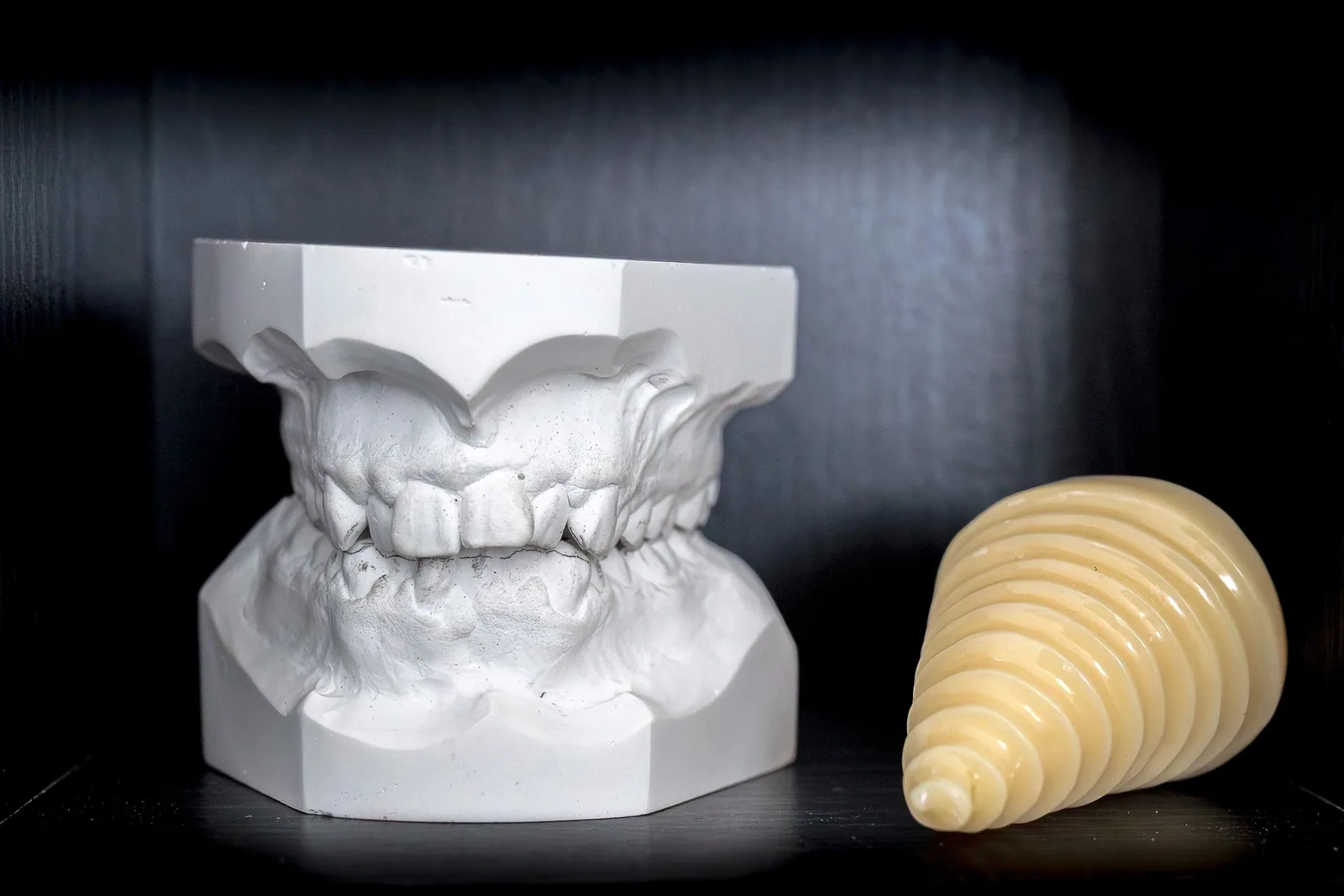
The “trismus Christmas tree” is a nickname for a tapered, ridged screw-type device. Its shape means it can be placed between the front teeth even when opening is very small, then gently turned so the mouth opens a little further. The principle is the same as other screw devices: small, controlled increases in opening. What matters most is not the shape, but that it suits your teeth, gums, mouth and level of opening, and that you have been shown how to use it safely.
Trismus screws for TMJ and other jaw problems
The temporomandibular joints connect your lower jaw to your skull and allow your jaw to open, close and move side to side. Jaw movement can become restricted after TMJ surgery, facial fractures, injury or jaw surgery, as well as after cancer treatment.
Screw-powered devices have been studied for this. In one study of 19 people with restricted jaw movement after surgery or injury, average mouth opening roughly doubled, from around 16 mm to 34 mm, with no complications reported. However, not all TMJ problems cause restricted opening. A trismus screw is not a general treatment for jaw pain or clicking, so the cause of the problem should always be checked by a healthcare specialist first.
Choosing and using the right device
There is no evidence that one device is best for everyone. Studies comparing different devices and exercise routines have found them to work broadly as well as each other. The right choice depends on things such as:
- how far you can currently open your mouth
- what has caused your trismus
- the condition of your teeth and gums
- any surgery or reconstruction you have had
- pain and sensitivity
- whether you can position and use the device yourself.
Whichever device you use, stretching a stiff jaw can feel uncomfortable, but it should not be sharply painful. More force is not better. Pain and poorly fitting devices are common reasons people stop using them, and rare complications such as damage to teeth or the jaw have been reported when devices are used incorrectly. That is why it is important to be shown how to use your device properly and to follow the programme your clinician gives you. If you notice sudden pain, new swelling or any problems with your teeth, speak to your healthcare team.
Staying consistent and focusing on what matters to you
Using a device once or twice is unlikely to make a lasting difference. Trismus improves through a regular, structured programme. People tend to find it easier to keep going when they have regular contact with their care team, clear information, realistic goals, support from family and friends, and an understanding of why the exercises matter. Common obstacles include treatment side effects, tiredness, anxiety and feeling overwhelmed by information. So the best device is not necessarily the most complicated one. It is the one you understand, can use comfortably, and that fits your treatment plan.
Measuring mouth opening helps track progress, but the real goal is making daily life easier. For one person, a few extra millimetres might mean brushing their teeth more easily. For another, it might mean enjoying a wider range of food, or allowing a dentist to reach their back teeth. Your goals should reflect what matters most to you.
Frequently Asked Questions: Everything you need to know about trismus
Q. What is trismus?
A. Trismus is difficulty opening your mouth fully, usually because the jaw muscles or jaw joint have become tight, inflamed or scarred. Most adults can open their mouth 40–50 mm. After head and neck cancer, an opening of 35 mm or less is usually classed as trismus.
Q. What causes trismus?
A. Common causes include wisdom tooth problems or removal, dental infections, a dental injection, jaw injuries, TMJ problems, and surgery or radiotherapy to the head and neck.
Q. Is trismus the same as lockjaw or tetanus?
A. "Lockjaw" is simply an everyday name for trismus. Tetanus is one rare cause, but most trismus has nothing to do with tetanus. If jaw stiffness comes with muscle spasms after a wound, seek urgent medical help.
Q. How can I tell if my mouth opening is restricted?
A. A simple check is to try fitting three of your fingers, stacked on top of each other, between your top and bottom front teeth. If you cannot, your opening may be reduced. A clinician can measure it accurately.
Q. How long does trismus last?
A. It depends on the cause. Trismus after a tooth extraction or infection often settles within days to a few weeks. Trismus after radiotherapy tends to last longer, because scar tissue builds up gradually, and it usually needs ongoing exercise.
Q. Is trismus permanent?
A. Not necessarily. Short-term trismus often improves on its own. Trismus after cancer treatment is less likely to go away without help and can become long-lasting if untreated, but many people improve with a structured exercise programme, even years after treatment.
Q. What exercises help trismus?
A. Gentle, regular stretching is the foundation: slowly opening as wide as is comfortable, holding, and repeating several times a day. Your clinician may add a device such as TheraBite or a trismus screw. Never stretch through sharp pain.
Q. Can trismus be prevented during radiotherapy?
A. It may help to start jaw exercises early, although research results are mixed. Ask your care team before or during radiotherapy whether jaw exercises are right for you.
Q. Is a trismus screw the same as a TheraBite?
A. No. Both help to stretch the jaw, but they work differently. TheraBite uses a lever, while a trismus screw uses a threaded screw to open the mouth in small steps and can suit very limited opening. Neither is best for everyone.
Q. When should I see a specialist about trismus?
A. See a professional if restricted opening lasts more than a few days, keeps getting worse, or affects eating, speaking or cleaning your teeth. Get urgent help if it comes with fever, facial swelling, or difficulty swallowing or breathing. If you have had head and neck cancer, always report new or worsening trismus to your care team.
Final thoughts
Trismus can be a challenging side effect of head and neck cancer treatment, surgery and other conditions affecting the jaw, but it can often be improved. Jaw exercises and jaw-opening devices such as TheraBite and trismus screws work in different ways towards the same goal: gentle, controlled stretching to help you open your mouth further.
There is no single device or exercise programme that suits everyone. What matters most is a proper assessment, a device and programme chosen for you, using it correctly, and keeping up with your exercises.
Written by:
Anna Veli - Consultant Maxillofacial Prosthetist (Engreco Healthcare)
(11 October 2026)